• Skip to primary navigation
  • Skip to main content
  • Skip to primary sidebar

Positive Life and Living

Advocating for positive life and living to improve happiness. quality of life and improved wellbeing around the world.

  • Home
  • Recent Posts
  • Products
  • PLL AI Advisor
  • Initiatives & Projects
    • Positive Agers
    • I’ve been PERMA-V’ed
  • Quotes

bill

Smart Guide – Strengths Feedback

31 October 2024 by bill Leave a Comment

Implement a regular practice of providing strengths-based feedback, where feedback is focused on recognizing and reinforcing the use of character strengths in personal, educational, or professional contexts.

Introduction to Strengths-Based Feedback

Have you ever noticed how much nicer it feels when someone acknowledges what you do well instead of just pointing out your mistakes? Strengths-based feedback is all about recognizing and enhancing the positive traits in yourself and others. It’s not just about fixing weaknesses; it’s about understanding and harnessing what makes you great. This guide will show you how to practice this uplifting approach regularly, whether in your personal life, at school, or at work.

What Are Character Strengths?

The 24 character strengths are organized under six broad virtues, which were developed by psychologists Christopher Peterson and Martin Seligman. Here’s the list of character strengths grouped by their corresponding virtues:

  1. Wisdom and Knowledge – Cognitive strengths that entail the acquisition and use of knowledge
    • Creativity: Thinking of novel and productive ways to conceptualize and do things.
    • Curiosity: Taking an interest in ongoing experience for its own sake.
    • Judgment: Thinking things through and examining them from all sides.
    • Love of Learning: Mastering new skills, topics, and bodies of knowledge.
    • Perspective: Being able to provide wise counsel to others.
  2. Courage – Emotional strengths that involve the exercise of will to accomplish goals in the face of opposition, external or internal
    • Bravery: Not shrinking from threat, challenge, difficulty, or pain.
    • Perseverance: Finishing what one starts.
    • Honesty: Speaking the truth and presenting oneself in a genuine way.
    • Zest: Approaching life with excitement and energy.
  3. Humanity – Interpersonal strengths that involve tending and befriending others
    • Love: Valuing close relations with others.
    • Kindness: Doing favors and good deeds for others.
    • Social Intelligence: Being aware of the motives and feelings of other people and oneself.
  4. Justice – Civic strengths that underlie healthy community life
    • Teamwork: Working well as a member of a group or team.
    • Fairness: Treating all people the same according to notions of fairness and justice.
    • Leadership: Encouraging a group of which one is a member to get things done.
  5. Temperance – Strengths that protect against excess
    • Forgiveness: Forgiving those who have done wrong.
    • Humility: Letting one’s accomplishments speak for themselves.
    • Prudence: Being careful about one’s choices; not taking undue risks.
    • Self-regulation: Regulating what one feels and does.
  6. Transcendence – Strengths that forge connections to the larger universe and provide meaning
    • Appreciation of Beauty and Excellence: Noticing and appreciating beauty, excellence, and/or skilled performance.
    • Gratitude: Being aware of and thankful for the good things that happen.
    • Hope: Expecting the best in the future and working to achieve it.
    • Humor: Liking to laugh and tease; bringing smiles to other people.
    • Spirituality: Having coherent beliefs about the higher purpose and meaning of the universe.

Each of these strengths contributes to the individual’s ability to thrive and live a fulfilling and positive life.

Understanding Strengths

Character strengths are those good qualities that define how you think, feel, and behave. They’re like your secret superpowers that help you succeed and live a meaningful life. Knowing your strengths can boost your happiness, make work more enjoyable, and enhance your learning experience.

Finding Your Strengths

To start using strengths-based feedback, you first need to know .

Setting Up Your Feedback Routine

Defining Your Goals

Before you can start giving or getting feedback, think about what you want to achieve. In a school setting, you might aim to help students become more engaged and perform better by focusing on what they do best. In the workplace, it might be about boosting team productivity and satisfaction.

Who Should Give Feedback?

Decide who’s going to give feedback. It can be a teacher, manager, coworker, or even a friend. Each person can provide different insights. For example, a coach might give you strategic feedback on sports, while a peer might offer emotional support.

How to Give Strengths-Based Feedback

Keep It Regular

Strengths-based feedback works best when it’s a regular thing! Try to schedule weekly or monthly feedback sessions to keep the positive vibes flowing.

Focus on Specifics

When giving feedback, be clear and specific. Point out what the person did well. For example, instead of saying, “You did a good job,” try, “Your leadership skills really helped our team finish the project ahead of time.”

Stay Positive

Always aim to lift the person up. Focus on their strengths and how they can use these strengths to overcome challenges. Steer clear of negative comments unless they’re constructive and paired with a positive suggestion on how to turn things around.

Using Feedback in Education

In the Classroom

Teachers can shine a spotlight on students’ strengths by adapting lessons to suit them. For instance, if a student is particularly creative, they might thrive in projects that allow for artistic expression.

Boosting Learning and Confidence

When students know their strengths, they become more confident and engaged. They take pride in their work, which can lead to better grades and a more positive school experience.

Using Feedback at Work

Performance Reviews

Transform those dreaded performance reviews into positive growth opportunities! Focus on what employees do well and discuss how they can use their strengths to advance and take on new challenges.

Enhancing Teamwork

By recognizing each team member’s strengths, you can improve how your team works together. It helps in task distribution and tapping into each person’s unique abilities for the benefit of the project.

Using Feedback in Personal Growth

Self-Assessment

Strengths-based feedback isn’t limited to others. Look at your own strengths regularly. Reflect on them and find ways to apply them in different parts of your life for more satisfaction and growth.

Facing Challenges

While it’s great to play to your strengths, it’s also important to challenge yourself. Use your strengths to step out of your comfort zone occasionally. This not only fosters growth but also keeps life interesting.

Conclusion

Practicing strengths-based feedback can lead to wonderful transformations, whether in your personal life, classroom, or work. By focusing on what you or others do best, you enhance engagement, improve performance, and contribute to a happier and more fulfilling environment. This positive approach aligns with the broader principles of positive psychology, which aim to help individuals discover what is best within themselves and enable people and communities to truly thrive. Start today, and watch how focusing on strengths can change your world for the better!

Filed Under: Products, Smart Guide

Smart Guide – Strengths Spotting

31 October 2024 by bill Leave a Comment

Strengths Spotting: A Practical Guide to Enhancing Well-Being and Relationships

Encourage individuals to identify and reflect on moments when they or others are using their strengths. This can be facilitated through daily journals, shared group discussions, or structured feedback sessions.

Introduction: Discovering the Power of Strengths

Welcome to the world of Strengths Spotting! This guide is designed to help you recognize and harness your own strengths, as well as those of others around you. Whether you’re a student, part of a corporate team, or a community member, learning to focus on strengths can improve your self-esteem, enhance your relationships, and boost your productivity and satisfaction. We’ll explore how to incorporate Strengths Spotting into your daily life through activities like journaling, group discussions, and feedback sessions.

What Are Strengths?

Defining Strengths

Essentially, strengths are the natural talents, skills, and knowledge you possess. They’re the things you excel at and can develop further to strive for excellence. This concept is beautifully laid out in the VIA Classification of Strengths and Virtues, a system by Martin Seligman and Christopher Peterson. It divides 24 character strengths into six virtues: wisdom, courage, humanity, justice, temperance, and transcendence. Here’s the list of character strengths grouped by their corresponding virtues:

  1. Wisdom and Knowledge – Cognitive strengths that entail the acquisition and use of knowledge
    • Creativity: Thinking of novel and productive ways to conceptualize and do things.
    • Curiosity: Taking an interest in ongoing experience for its own sake.
    • Judgment: Thinking things through and examining them from all sides.
    • Love of Learning: Mastering new skills, topics, and bodies of knowledge.
    • Perspective: Being able to provide wise counsel to others.
  2. Courage – Emotional strengths that involve the exercise of will to accomplish goals in the face of opposition, external or internal
    • Bravery: Not shrinking from threat, challenge, difficulty, or pain.
    • Perseverance: Finishing what one starts.
    • Honesty: Speaking the truth and presenting oneself in a genuine way.
    • Zest: Approaching life with excitement and energy.
  3. Humanity – Interpersonal strengths that involve tending and befriending others
    • Love: Valuing close relations with others.
    • Kindness: Doing favors and good deeds for others.
    • Social Intelligence: Being aware of the motives and feelings of other people and oneself.
  4. Justice – Civic strengths that underlie healthy community life
    • Teamwork: Working well as a member of a group or team.
    • Fairness: Treating all people the same according to notions of fairness and justice.
    • Leadership: Encouraging a group of which one is a member to get things done.
  5. Temperance – Strengths that protect against excess
    • Forgiveness: Forgiving those who have done wrong.
    • Humility: Letting one’s accomplishments speak for themselves.
    • Prudence: Being careful about one’s choices; not taking undue risks.
    • Self-regulation: Regulating what one feels and does.
  6. Transcendence – Strengths that forge connections to the larger universe and provide meaning
    • Appreciation of Beauty and Excellence: Noticing and appreciating beauty, excellence, and/or skilled performance.
    • Gratitude: Being aware of and thankful for the good things that happen.
    • Hope: Expecting the best in the future and working to achieve it.
    • Humor: Liking to laugh and tease; bringing smiles to other people.
    • Spirituality: Having coherent beliefs about the higher purpose and meaning of the universe.

Each of these strengths contributes to the individual’s ability to thrive and live a fulfilling and positive life.

Why Focus on Strengths?

Research in positive psychology highlights that concentrating on strengths leads to greater job satisfaction, boosted self-esteem, reduced stress, and better overall well-being. Using your strengths also enhances your positive emotions and engagement in life, key ingredients of a fulfilling life vision covered in Seligman’s PERMA model—positive emotions, engagement, relationships, meaning, and achievement, with vitality sometimes added (PERMA-V).

Getting Started: Setting the Stage for Success

Who Can Benefit?

Strengths Spotting is for everyone! Whether you’re a student looking to improve your study skills, part of a work team aiming for better collaboration, or a community group seeking enhanced cohesion, this approach has something for you.

Planning Your Journey

  • Duration: Consider running this as an eight-week program with weekly activities.
  • Supplies: You’ll need journals for reflecting, feedback forms, and some basic session materials.

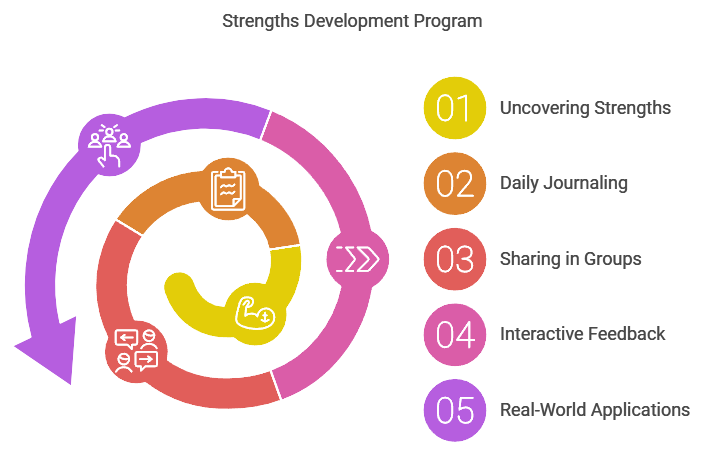
Phase 1: Uncovering Strengths

Session 1: Get to Know Your Strengths

Start by understanding what strengths are and how they can empower you. Explore the 24 character strengths using engaging activities. This could mean taking a strengths survey or brainstorming with a group.

Action Step: Begin a daily strengths journal, noting every time you spot a personal strength in action.

Phase 2: Daily Journaling for Insight

Building the Habit

In your journal, capture moments when you or others use a strength. Describe the situation, identify the strength, and note the impact it had. This helps you recognize and build on these moments daily.

Tips for Deeper Reflection: Use journal prompts to think about how these strengths shape your life and work.

Phase 3: Sharing and Learning in Groups

Weekly Conversations

Hold regular gatherings where everyone shares and discusses their journal highlights. These sessions can focus on particular strengths or virtues, gradually covering all areas.

Discussion Topics: Each session might explore different aspects like courage or wisdom, providing fresh perspectives each week.

Phase 4: Getting Feedback and Expanding Knowledge

Interactive Feedback

Around the middle of your program, check in with participants to assess their progress. This is a time to discuss what’s working and where challenges lie.

Bring in Experts: Occasionally invite guest speakers or coaches who can provide professional insights on maximizing strengths.

Phase 5: Putting Strengths Into Practice

Real-World Applications

Encourage everyone to apply their strengths in new areas or challenging scenarios, then reflect on these experiences in their journals. This practical use reinforces learning.

Team Projects: Collaborate on projects that require diverse strengths, showing how different strengths can drive group success.

Evaluating Progress and Celebrating Success

Ongoing Engagement

Keep track of how participants are doing. Regularly adjust your approach based on what’s working best for everyone.

The Journey’s End and New Beginnings

Finish your program with a survey or some interviews to understand how participants feel about their strengths usage and well-being now compared to before.

Share Success Stories: Celebrating individual and group accomplishments can inspire continued growth and application of strengths.

Wrap-Up: The Strength in Spotting Strengths

By consistently practicing Strengths Spotting, you can transform your personal and group dynamics. This framework not only helps individuals recognize their unique qualities but also encourages ongoing development and application. Focusing on strengths isn’t just about personal growth; it’s about building stronger, more connected communities and teams. Let’s embark on this empowering journey—spot your strengths and shine!

Filed Under: Products, Smart Guide

Smart Guide – Use signature strengths in new ways each day to increase happiness and decrease depression

31 October 2024 by bill Leave a Comment

Introduction

Have you ever felt like you’re not quite tapping into your full potential or experiencing the happiness you deserve? Positive psychology tells us that using our unique character strengths—our “signature strengths”—in new and interesting ways each day can really boost our happiness and help combat feelings of depression. Let’s dive into how you can embrace this approach to feel more satisfied and fulfilled in your life.

Theoretical Background

What Are Signature Strengths?

Imagine the traits that make you feel most like yourself, the qualities that energize you and that you love to show off. These are your signature strengths. Unlike the skills you might acquire over time, signature strengths are more about your natural quirks and the ways you shine without much trying. Research shows that when we tap into these strengths regularly, we feel happier and more authentic.

How They Boost Well-being

When you’re using your signature strengths, you often experience flow—those magical moments when you’re completely absorbed and enjoying an activity so much that time flies by. Using these strengths in new ways keeps life exciting and helps avoid the dullness that comes from routine.

Approach

Your Path to Happiness

The goal of this approach is simple: to help you become more aware of your unique strengths and use them in fresh, diverse contexts every day. By doing so, you’ll find boosts in happiness and reductions in feelings of depression.

How Long and How Often?

For the best results, dedicate about 8 weeks to this journey, engaging in daily activities that highlight your strengths.

Tools to Get Started

  • VIA Character Strengths Survey: This will help you identify your top five strengths.
  • Daily Strengths Journal: A space to jot down your daily adventures in strength use.
  • Weekly Workshops: Opportunities to connect with others, gain new insights, and share your progress.

Implementation Steps

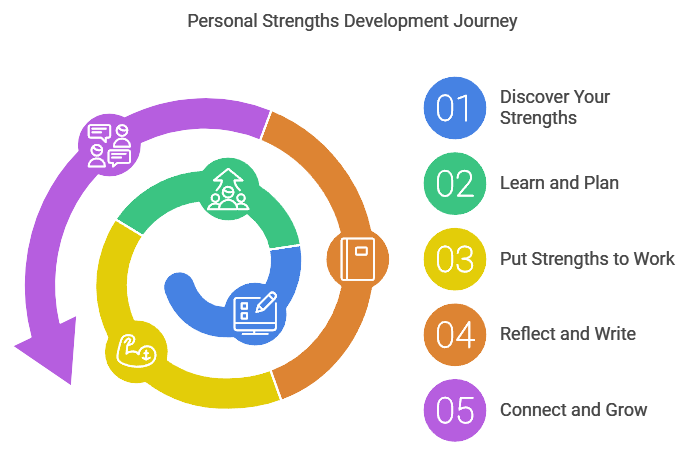
Step 1: Discover Your Strengths

Kick things off by taking the VIA Character Strengths Survey. This is your chance to see what makes you uniquely special and set the foundation for this adventure.

The 24 character strengths are organized under six broad virtues according to the VIA Classification, which was developed by psychologists Christopher Peterson and Martin Seligman. Here’s the list of character strengths grouped by their corresponding virtues:

  1. Wisdom and Knowledge – Cognitive strengths that entail the acquisition and use of knowledge
    • Creativity: Thinking of novel and productive ways to conceptualize and do things.
    • Curiosity: Taking an interest in ongoing experience for its own sake.
    • Judgment: Thinking things through and examining them from all sides.
    • Love of Learning: Mastering new skills, topics, and bodies of knowledge.
    • Perspective: Being able to provide wise counsel to others.
  2. Courage – Emotional strengths that involve the exercise of will to accomplish goals in the face of opposition, external or internal
    • Bravery: Not shrinking from threat, challenge, difficulty, or pain.
    • Perseverance: Finishing what one starts.
    • Honesty: Speaking the truth and presenting oneself in a genuine way.
    • Zest: Approaching life with excitement and energy.
  3. Humanity – Interpersonal strengths that involve tending and befriending others
    • Love: Valuing close relations with others.
    • Kindness: Doing favors and good deeds for others.
    • Social Intelligence: Being aware of the motives and feelings of other people and oneself.
  4. Justice – Civic strengths that underlie healthy community life
    • Teamwork: Working well as a member of a group or team.
    • Fairness: Treating all people the same according to notions of fairness and justice.
    • Leadership: Encouraging a group of which one is a member to get things done.
  5. Temperance – Strengths that protect against excess
    • Forgiveness: Forgiving those who have done wrong.
    • Humility: Letting one’s accomplishments speak for themselves.
    • Prudence: Being careful about one’s choices; not taking undue risks.
    • Self-regulation: Regulating what one feels and does.
  6. Transcendence – Strengths that forge connections to the larger universe and provide meaning
    • Appreciation of Beauty and Excellence: Noticing and appreciating beauty, excellence, and/or skilled performance.
    • Gratitude: Being aware of and thankful for the good things that happen.
    • Hope: Expecting the best in the future and working to achieve it.
    • Humor: Liking to laugh and tease; bringing smiles to other people.
    • Spirituality: Having coherent beliefs about the higher purpose and meaning of the universe.

Each of these strengths contributes to the individual’s ability to thrive and live a fulfilling and positive life. Your signature strengths are the top five strengths identified in your VIA Character Strengths Survey results.

Step 2: Learn and Plan

Start by attending a workshop to understand how these strengths work and brainstorm ways to integrate them into daily life. This is about setting the stage for creative strength use.

Step 3: Put Strengths to Work

Aim to engage your top strengths in new ways each day. It’s about mixing things up! If kindness is your strength, maybe today help a stranger, and tomorrow offer a listening ear to a friend. If creativity is your thing, explore different artistic outlets each week.

Step 4: Reflect and Write

Use your journal to note how you used your strengths each day, what you did, and how it made you feel. Reflecting helps cement the experience and keeps you motivated.

Step 5: Connect and Grow

Join weekly group meetings where you can share stories, tackle challenges, and refine your approaches. These gatherings are about building a community and learning from one another.

Evaluation

Measuring Success

We’ll see how this process is working through both emotional and practical lenses. Before and after the intervention, use well-being and depression scales to track progress. Additionally, your journal entries and participant feedback provide invaluable insights into your personal experience.

Anticipated Transformations

By diving into your strengths every day, you can look forward to more happiness, less depression, and an overall sense of purpose and engagement in what you do. Your daily routine should start feeling like something you look forward to rather than just get through.

Conclusion

This approach is all about positive change through personal strengths. By encouraging you to discover and stretch these unique aspects of yourself daily, you set off on a path toward greater happiness and life satisfaction. You’ve got the tools; now it’s time to explore and grow into the best version of yourself!

Filed Under: Products, Smart Guide

Smart Guide – Vitality: Nutrition and Hydration Optimization

18 October 2024 by bill Leave a Comment

Nutrition and hydration are key to living a healthy, active life. Eating well and staying hydrated can boost your physical performance, mental alertness, and overall mood. Here’s a simple guide to help you make smart choices every day.

Step 1: Assess Your Current Habits

What to Look at First

  1. Diet: Think about what you typically eat in a day. Are there certain foods you eat more often? Are you skipping entire food groups?
  2. Hydration: Consider how much water and other liquids you’re drinking daily. Do you frequently feel thirsty or fatigued?
  3. Health Check: See if you have any medical conditions that could be affected by your diet or hydration, like diabetes or allergies. A quick chat with your doctor might be helpful.

Step 2: Set Your Personal Goals

What Changes Do You Need?

  1. Eat a Balanced Diet: Aim for more fruits, vegetables, lean proteins, and whole grains. Try reducing sugary and processed foods.
  2. Drink Enough Water: Your needs will vary based on your activity level and the climate, but generally, try to aim for 8 cups a day.

Step 3: Learn More About Nutrition and Hydration

Key Knowledge Areas

  1. Nutrients: Understand the basics of carbohydrates, proteins, fats, vitamins, and minerals. Learn what roles they play in your body.
  2. Hydration: Recognize the signs of dehydration like dry mouth, headache, or fatigue. Know why water is crucial for energy and focus.

Step 4: Create Your Plan

How to Start

  1. Meal Planning: Based on your favorite foods and any dietary restrictions, plan meals that are balanced and satisfying.
  2. Hydration Schedule: Establish a routine for water intake. Consider carrying a water bottle with you to make it easier to stay hydrated.

Step 5: Monitor Your Progress

Stay on Track

  1. Check Your Diet: Reflect on your weekly eating habits. Are there areas you can improve? Apps can help track meals and provide insights.
  2. Watch Hydration Levels: Regularly assess your fluid intake. If you’re active or in a hot climate, you may need to drink more.

Step 6: Use Support and Resources

You Don’t Have to Do It Alone

  1. Community Support: Join a group or online forum where you can share tips, challenges, and successes with others.
  2. Professional Help: Consider seeking advice from a nutritionist or a dietitian to refine your plan or address specific concerns.

Additional Tips

  • Set Smart Goals: Make sure your goals are Specific, Measurable, Achievable, Relevant, and Time-bound (SMART).
  • Reward Yourself: Celebrate small victories to stay motivated, like trying a new recipe or hitting your water intake goal for the week.

By following this simplified guide and making small changes, you’ll be on your way to better nutrition and hydration, leading to a healthier, happier you. Remember, consistency is key, and with the right support and information, you can make lasting improvements to your health and well-being.

Filed Under: Products, Smart Guide

Smart Guide – Gratitude Journaling

18 October 2024 by bill Leave a Comment

Concept: Regularly writing down things for which one is grateful, to enhance positive emotions and appreciation for life.

Introduction to Gratitude Journaling

Gratitude journaling is a simple practice with powerful benefits. It involves regularly writing down things you’re thankful for. Doing this can lead to improved mental health, increased well-being, and a more positive outlook on life. By focusing on the positives, gratitude journaling helps you appreciate the good in your life and shift your attention away from the negatives.

The Power of Gratitude

The Role of Positive Psychology

Gratitude journaling is rooted in positive psychology, a field that focuses on encouraging positive emotions and personal strengths. Experiencing gratitude can significantly increase your happiness and life satisfaction. Studies show that people who regularly practice gratitude feel better about their lives and are less likely to experience mental health issues.

How Gratitude Changes Your Mind

When you practice gratitude, you train your brain to see the world in a more positive light. Instead of dwelling on what’s wrong, you start noticing and appreciating the good. This shift can help reduce feelings of depression and anxiety, replacing them with a sense of peace and happiness.

How Often Should You Journal?

You might wonder how often you should write in your gratitude journal. Research suggests that journaling three times a week is more effective than doing it every day. This frequency allows you to reflect deeply without the practice becoming a chore.

Use Prompts to Guide You

To get the most out of gratitude journaling, use prompts to focus your thoughts. Questions like “What are three things you’re grateful for today?” or “Who is someone you’re thankful for, and why?” can help you dive deeper into your feelings of gratitude.

Reflect with Depth

It’s not just about listing things you’re grateful for. Take the time to reflect on why you’re grateful for these things and how they impact your life. This deeper reflection can amplify the benefits of the practice.

Making Gratitude Journaling a Habit

Choose Your Journal

Choose a journal that feels right for you, whether it’s a notebook or a digital app. Your journal should be a place where you feel comfortable expressing your thoughts and feelings.

Find the Right Time

Incorporate journaling into your daily routine by choosing a time that works for you, like in the morning or before bed. Consistency helps build the habit and makes it a regular part of your life.

Create a Comfortable Space

Make sure you have a private and comfortable space to journal without interruptions. This will help you focus and reflect more deeply.

Supporting Your Gratitude Journey

Check-in Regularly

Having regular check-ins can be beneficial. Talk about your experiences and any challenges you’re facing. This can help you stay on track and make necessary adjustments to better fit the practice into your life.

Be Flexible

Everyone is different, so find what works best for you. Some people may benefit from journaling more often, while others might add creativity, like drawing, to their practice.

Measuring Your Progress

Listen to Your Feelings

Pay attention to how you feel before and after starting gratitude journaling. Interviews or surveys can help capture these personal experiences and highlight the impact on your well-being.

Track Changes

Use assessments like the Gratitude Questionnaire-Six Item Form (GQ-6) before and after you start journaling to see how your gratitude levels change. These tools can help measure improvements in your overall happiness and mental health.

Conclusion

Gratitude journaling is a straightforward yet impactful practice that can boost your mood and help you appreciate life more. By regularly writing about what you’re grateful for, you can make lasting changes to your mental health and well-being. The key is to make it personal, consistent, and supported by a nurturing environment. By doing so, you can unlock the full potential of this positive practice and enhance your quality of life.

Filed Under: Products, Smart Guide

  • « Go to Previous Page
  • Page 1
  • Page 2
  • Page 3
  • Page 4
  • Interim pages omitted …
  • Page 6
  • Go to Next Page »

Primary Sidebar

Random Quotes

"This emotional uplift is elevation, and we humans are designed to feel it when we see a morally beautiful act."Robert Biswas-Diener
The Courage Quotient

Recent Posts

  • Checklist – Practicing self-reflection and regularly reviewing progress to celebrate achievements and identify opportunities for continued growth.
  • Intervention – Setting and tracking specific, measurable, achievable, relevant, and time-bound (SMART) goals to foster a sense of progress and accomplishment.
  • Smart Guide – Savoring: Enjoying Life’s Moments for Greater Happiness and Well-being
  • Smart Guide – Gratitude Journaling: A Smart Guide to Boosting Your Happiness
  • Smart Guide – Engagement – Job Crafting to Enrich Your Work Life
  • Smart Guide – Strengths Feedback
  • Smart Guide – Strengths Spotting
  • Smart Guide – Use signature strengths in new ways each day to increase happiness and decrease depression
  • Smart Guide – Vitality: Nutrition and Hydration Optimization
  • Smart Guide – Gratitude Journaling

Check out Positive Agers web site!

Check out I’ve Been PERMA-V’ed website

Login Status

Forgot? 

Copyright © 2026 · The Flourish Rebel · Log in