• Skip to primary navigation
  • Skip to main content
  • Skip to primary sidebar

Positive Life and Living

Advocating for positive life and living to improve happiness. quality of life and improved wellbeing around the world.

  • Home
  • Recent Posts
  • Products
  • PLL AI Advisor
  • Initiatives & Projects
    • Positive Agers
    • I’ve been PERMA-V’ed
  • Quotes

Products

A Smart Guide for setting shared goals and regularly reviewing them together

6 September 2024 by bill Leave a Comment

Introduction

Ever feel like you’re not making progress on your goals? Whether it’s at work or in your personal life, setting shared goals and regularly checking in on them can be a game-changer. This process isn’t just about making a to-do list; it’s a way to unify everyone involved, boost motivation, and keep everyone on track.

Understanding Shared Goals

What Are Shared Goals and Why Do They Matter?

Shared goals are objectives set together by a group of people, designed to benefit everyone involved. These goals rely on commitment and teamwork. When you set goals with others, you’re pooling your resources and efforts, creating a stronger sense of partnership.

Key Ingredients for Successful Goals

  • Be Specific: Make your goals clear and detailed so everyone knows the direction.
  • Measure It: Make sure your goals can be tracked; this helps in seeing progress.
  • Keep It Realistic: Goals should be achievable. Unrealistic goals can be demotivating.
  • Stay Relevant: Make sure the goals matter to everyone involved.
  • Time It: Set a timeline. Deadlines help keep things moving.

How to Set Shared Goals

Getting Started

  • Who’s Involved?: Identify everyone who will be affected by the goals and get them involved from the start.
  • What’s Needed?: Understand what needs to be done and what resources are available.

Creating the Goals

  • Brainstorm Together: Have meetings where everyone can throw their ideas in the ring.
  • Build Consensus: Discuss and tweak goals until everyone agrees on the main objectives.

Finalizing

  • Write It Down: Clearly document your agreed goals and the steps to achieve them.
  • Plan to Communicate: Decide how you’ll keep everyone updated on progress.

Checking In On Your Goals

Set Review Timelines

  • Short-term Check-ins: Weekly or monthly meetings to review immediate progress.
  • Long-term Reviews: Quarterly or yearly meetings for big-picture analysis and adjustments.

Review Meetings

  • Do Your Homework: Have all the necessary data and progress reports ready for review.
  • Discuss Progress: Talk about what’s working and what needs tweaking.
  • Make Changes: Adjust goals based on feedback and changing circumstances.

Keeping Everyone Accountable and Motivated

  • Assign Duties: Make sure everyone knows what they’re responsible for.
  • Celebrate Wins: Recognize and reward contributions and good performance.

Tools and Techniques to Keep You on Track

Use Technology

  • Project Management Tools: Apps like Asana, Trello, or Monday.com are great for tracking goals and progress.
  • Communication Platforms: Tools like Slack or Microsoft Teams keep everyone connected.

Run Effective Meetings

  • Have an Agenda: Plan out what needs to be discussed.
  • End with Action Items: Make sure everyone leaves the meeting knowing what they need to do next.

Overcoming Challenges

Common Issues

  • Conflicting Priorities: Different goals can lead to conflicts.
  • Lack of Buy-in: If people aren’t committed, progress stalls.

Solutions

  • Keep Talking: Regular, open communication can help solve issues as they arise.
  • Stay Flexible: Be ready to adjust goals as new information comes in or situations change.

Conclusion

Setting and reviewing shared goals isn’t a one-shot deal. It takes effort, cooperation, and good communication. Follow the steps above and use the right tools to keep everyone aligned. Not only will this help you achieve your goals, but it will also strengthen your relationships and boost overall satisfaction and productivity.
Filed Under: Products, Smart Guide

A Smart Guide for Rediscovering Meaningful Past Experiences: A Guide to Enhancing Well-being

5 September 2024 by bill Leave a Comment

Feeling disconnected from past achievements and experiences that once brought you a sense of joy and purpose is more common than you might think. This guide aims to help you rediscover those meaningful moments and integrate the essence of those experiences into your daily life to boost your overall well-being, motivation, and happiness. Let’s walk through how you can make this a regular part of your life.

Why Reflect on Past Meaningful Experiences?

Understanding the Benefits

Reflecting on past meaningful experiences can help:

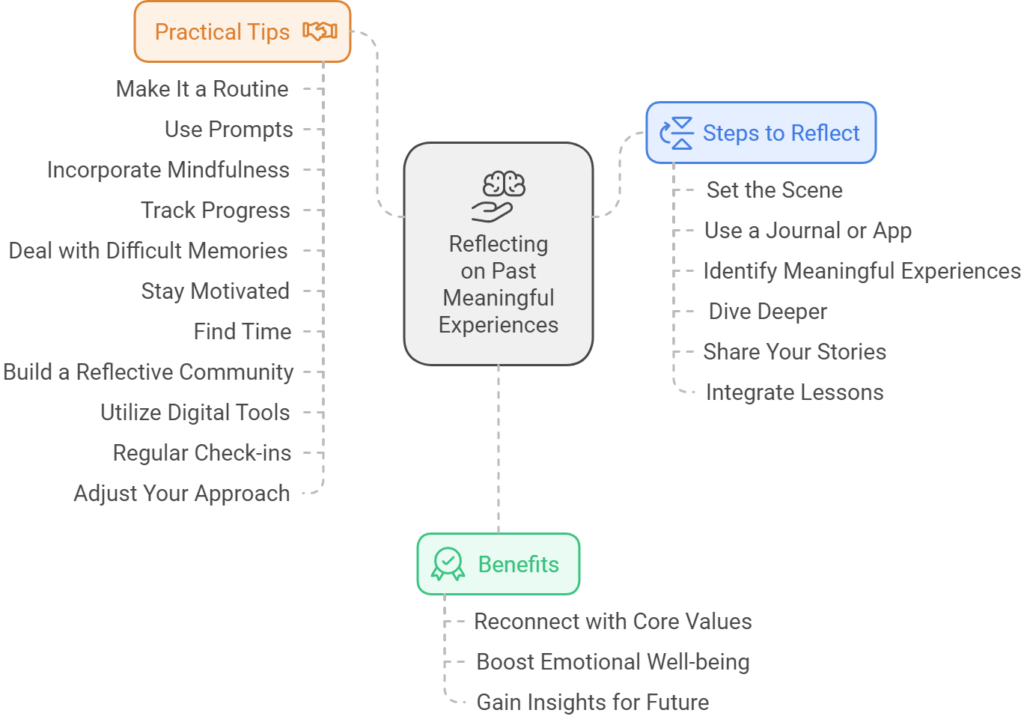
  • Reconnect you with core values and strengths.
  • Boost emotional well-being and provide a sense of purpose.
  • Offer insights that can be applied to current and future life challenges.

The Role of Memory in Shaping Identity

Memory isn’t just about recalling events; it’s about understanding how those events shaped who you are today. Reflecting on these memories can help you rediscover parts of yourself that you may have forgotten.

The Power of Stories

Everyone constructs their identity through stories. By recalling and sharing meaningful experiences, you can reshape your life story to emphasize growth, resilience, and fulfillment.

How to Start Reflecting on Past Meaningful Experiences

Step 1: Set the Scene for Reflection

Find a quiet, comfortable place where you can think without interruptions. This could be a cozy corner of your home, a favorite park bench, or even a quiet cafe. The environment should make you feel relaxed and undistracted.

Step 2: Use a Reflection Journal or Digital App

Having a dedicated place to write down your thoughts can be incredibly helpful. Whether you prefer a physical journal or a digital app, use it to record your reflections. Some good digital options include journaling apps like Day One or even a simple notes app on your phone.

Step 3: Identify Meaningful Experiences

Think about significant moments in your life that brought you joy, satisfaction, and a sense of purpose. These could be anything from achievements at work, personal milestones, time spent with loved ones, or even smaller moments that made a big impact.

Step 4: Dive Deeper into These Experiences

Choose one experience at a time to explore in more depth. Reflect on the circumstances, emotions, and values associated with it. Ask yourself questions like:

  • What made this experience meaningful?
  • How did it make you feel?
  • What core values or strengths were involved?

Step 5: Share Your Stories

If you’re comfortable, consider sharing these experiences with others. This could be through a group, a trusted friend, or even an online forum. Sharing not only helps reinforce the positive emotions but also allows for new perspectives and insights.

Step 6: Integrate Lessons into Your Current Life

Think about how the essence of these past experiences can be adapted to enhance your current situation. For example, if a past achievement made you feel competent and valued, find ways to apply those skills in your current job or hobbies.

Practical Tips for Regular Reflection

Make It a Routine

Set aside dedicated time each week to reflect on past experiences. This could be a Sunday morning ritual or a midweek evening activity. Consistency is key to making this practice effective.

Use Prompts to Guide Your Reflection

Sometimes it can be hard to know where to start. Use prompts to guide your reflection. Here are a few to get you started:

  • “Describe a time when you felt truly happy and alive. What were you doing?”
  • “Think about a moment when you overcame a significant challenge. What strengths did you use?”
  • “Recall a period when you felt closely connected to others. What made those relationships special?”

Incorporate Mindfulness Practices

Mindfulness can enhance reflection by helping you stay present and focused. Simple mindfulness practices like deep breathing or a short meditation can prepare your mind for deeper reflection.

Track Your Progress

Keep track of your reflections and any actions you take to integrate these experiences into your current life. This can help you see your progress over time and provide motivation to continue.

Overcoming Challenges

Dealing with Difficult Memories

Not every memory you reflect on will be positive. If you encounter difficult or painful memories, acknowledge them without judgment. You might find it helpful to talk to a mental health professional if these memories are overwhelming.

Staying Motivated

It can be easy to start strong and then lose momentum. To stay motivated:

  • Set small, attainable goals for your reflection practice.
  • Join a group or community for support and accountability.
  • Remind yourself regularly of the benefits you’re seeking.

Finding Time

Life can get busy, but finding time for reflection is crucial. Consider incorporating reflection into other activities such as walks, commutes, or before bed. Even a few minutes each day can make a difference.

Creating a Supportive Environment

Building a Reflective Community

Encourage friends or family members to join you in this reflection journey. Sharing experiences and insights can strengthen relationships and provide mutual support.

Utilizing Digital Tools

There are many apps and online platforms designed to facilitate reflection and sharing. Consider joining an online group dedicated to personal growth and well-being.

Evaluating Your Progress

Regular Check-ins

Set aside time every month to evaluate how your reflection practice is impacting your life. Are you feeling more connected to your past? Are these reflections helping you in your current life?

Adjusting Your Approach

Based on your evaluations, adjust your approach as needed. If something isn’t working, try a different prompt or a new environment. The goal is to find what works best for you.

Conclusion

Reflecting on past meaningful experiences is a powerful way to enhance your quality of life. By regularly engaging in this practice, you can reconnect with your core values, boost your emotional well-being, and find new ways to apply the wisdom of your past to your present and future. Start small, stay consistent, and watch how your life transforms.

Filed Under: Baby Boomers (1946-1964), Generation X (1965-1980), Generation Z (1997-2012), Millennials (1981-1996), Products, Silent generation (1928-1945), Smart Guide

Intervention – Reflecting on Past Meaningful Experiences

5 September 2024 by bill Leave a Comment

Encourage individuals to reflect on past experiences that brought them a sense of purpose and meaning, and explore how these can be integrated or recreated in their current lives.

An intervention designed to encourage individuals to reflect on past experiences that brought them a sense of purpose and meaning, and to explore how these can be integrated or recreated in their current lives, is a powerful tool in the field of positive psychology. This intervention aims to help participants rediscover moments of joy, fulfillment, and significance from their past and use these insights to enhance their present and future well-being. The detailed description below outlines the theoretical foundations, practical steps, and considerations necessary to implement this intervention effectively.

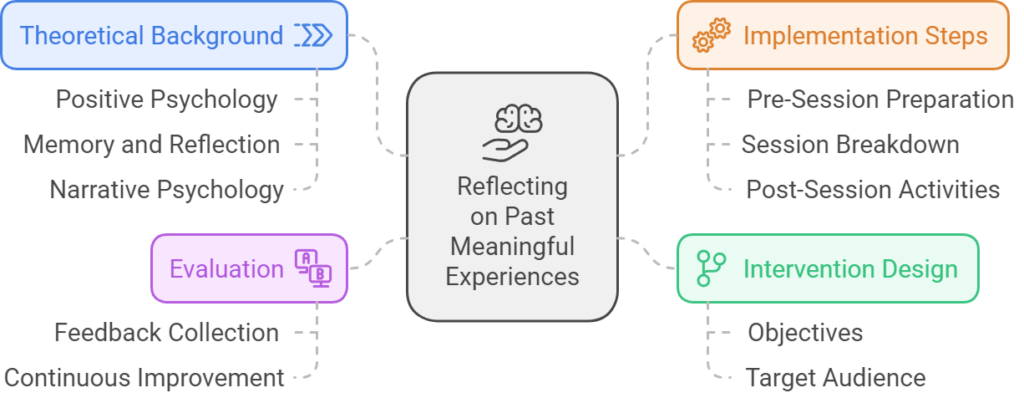
Theoretical Background

Positive Psychology and Meaning

Positive psychology focuses on the strengths that enable individuals and communities to thrive. One of the core aspects of positive psychology is the pursuit of a meaningful life. Research suggests that reflecting on meaningful past experiences can boost individuals’ current sense of purpose and overall well-being.

Memory and Reflection

Memory plays a crucial role in how we perceive and shape our identities. Reflective practices allow individuals to revisit and reinterpret their past experiences, potentially leading to new insights and emotional outcomes. By reflecting on past meaningful experiences, individuals can reconnect with their core values and the emotions associated with those times.

Narrative Psychology

Narrative psychology posits that individuals construct their identities through stories. By recalling and narrating meaningful experiences, people can reshape their life stories in ways that emphasize growth, resilience, and fulfillment.

Intervention Design

Objectives

  1. To help participants identify and reflect on past experiences that were particularly meaningful.
  2. To enable participants to understand how these experiences contributed to their sense of purpose and identity.
  3. To explore ways to integrate the essence of these past experiences into their current life circumstances.

Target Audience

This intervention is suitable for adults across various life stages who are seeking to enhance their sense of meaning and purpose in life. It can be adapted for specific groups, such as elderly individuals, veterans, or those undergoing significant life transitions.

Implementation Steps

Pre-Session Preparation

  • Recruitment and Screening: Participants are recruited through community centers, online platforms, and flyers. A screening process ensures that the intervention is appropriate for their psychological state.
  • Materials Preparation: Develop and distribute journals or digital apps for reflection exercises. Prepare guidelines and prompts to aid the reflection process.

Session Breakdown

Session 1: Introduction to Reflective Practice

  • Objective: Introduce the concept of meaningful experiences and reflective practice.
  • Activities:
    • Icebreaker activity to build rapport among participants.
    • Workshop on the principles of positive psychology and narrative psychology.
    • Introduction to the personal reflection journal.

Session 2: Identifying Meaningful Experiences

  • Objective: Guide participants in identifying past experiences that brought them joy, satisfaction, and a sense of purpose.
  • Activities:
    • Guided meditation to facilitate deep reflection.
    • Writing exercise: Participants list top five meaningful experiences.
    • Group sharing session to discuss these experiences and their impact.

Session 3: Deep Dive into Past Experiences

  • Objective: Encourage detailed reflection on the circumstances, emotions, and values associated with each identified experience.
  • Activities:
    • Participants choose one experience to explore in depth.
    • Facilitated storytelling session where participants share their chosen experience and receive feedback.
    • Reflective prompts to explore the underlying values and emotions.

Session 4: Integrating Experiences into Current Life

  • Objective: Develop strategies to integrate the essence of these past experiences into current life situations.
  • Activities:
    • Group brainstorming to find practical ways to recreate or adapt the values and joy found in past experiences.
    • Creation of a personal action plan.
    • Commitment ceremony where participants share their plans with the group.

Post-Session Activities

  • Follow-up: Arrange follow-up meetings or digital check-ins to discuss progress and challenges.
  • Community Building: Encourage ongoing communication among participants through a dedicated online forum or regular meet-ups.

Evaluation and Adaptation

Feedback Collection

Gather feedback through structured questionnaires and informal discussions to assess the intervention’s impact on participants’ sense of meaning and well-being.

Continuous Improvement

Analyze feedback to refine the intervention. Adapt the approach based on different needs and cultural backgrounds of participants.

Conclusion

Reflecting on past meaningful experiences is a profound exercise that not only reconnects individuals to their past joys and achievements but also empowers them to integrate these elements into their present and future lives. This intervention, rooted in positive psychology, offers a structured yet flexible framework to facilitate this reflective process. By doing so, it aims to enhance participants’ overall quality of life, providing them with the tools to craft a fulfilling and purpose-driven existence.

Filed Under: Baby Boomers (1946-1964), Generation X (1965-1980), Generation Z (1997-2012), Intervention, Millennials (1981-1996), Products, Silent generation (1928-1945)

  • « Go to Previous Page
  • Page 1
  • Page 2
  • Page 3
  • Page 4

Primary Sidebar

Random Quotes

"Is there someone in your life whom you would feel comfortable phoning at four in the morning to tell your troubles to? If your answer is yes, you will likely live longer than someone whose answer is no."Martin E. P. Seligman
Flourish

Recent Posts

  • Checklist – Practicing self-reflection and regularly reviewing progress to celebrate achievements and identify opportunities for continued growth.
  • Intervention – Setting and tracking specific, measurable, achievable, relevant, and time-bound (SMART) goals to foster a sense of progress and accomplishment.
  • Smart Guide – Savoring: Enjoying Life’s Moments for Greater Happiness and Well-being
  • Smart Guide – Gratitude Journaling: A Smart Guide to Boosting Your Happiness
  • Smart Guide – Engagement – Job Crafting to Enrich Your Work Life
  • Smart Guide – Strengths Feedback
  • Smart Guide – Strengths Spotting
  • Smart Guide – Use signature strengths in new ways each day to increase happiness and decrease depression
  • Smart Guide – Vitality: Nutrition and Hydration Optimization
  • Smart Guide – Gratitude Journaling

Check out Positive Agers web site!

Check out I’ve Been PERMA-V’ed website

Login Status

Forgot? 

Copyright © 2026 · The Flourish Rebel · Log in